Define the perimeter and its loads
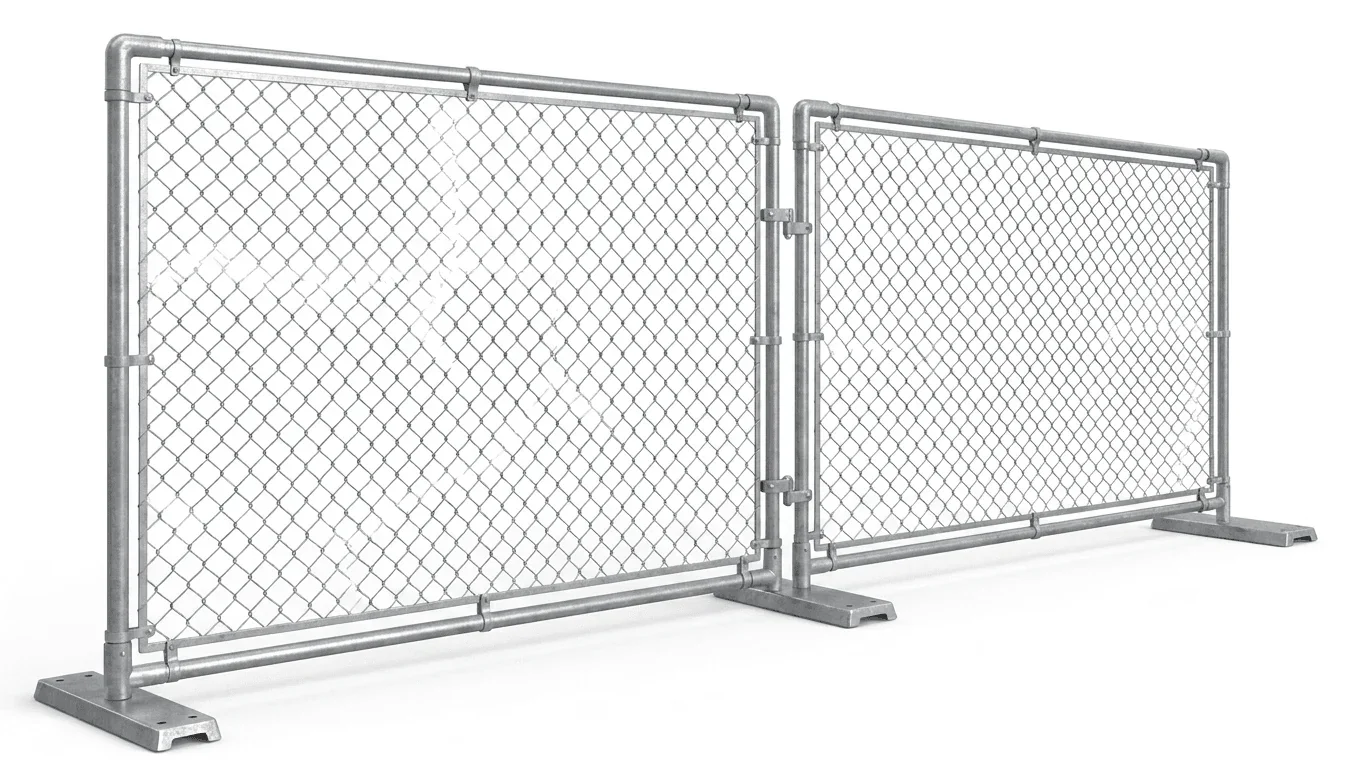
- Security versus guidance: a long-term perimeter around equipment yards sees different forces than short barricades guiding foot traffic inside a facility.
- Corners and gates: every corner concentrates load; wide gates at logistics buildings add movement and require solid approaches.
- Mixed traffic: plan for forklifts, telehandlers, and aerial lifts turning near panel feet.
Wind exposure on the plains
Open exposure in Oklahoma City increases lateral loads on panels. Actual conditions, the selected system’s instructions, and site procedures govern spacing, site-stability planning, and screening use. For planning, limit long, uninterrupted runs in the windiest alignments and break lines with braced corners.
Ground and drainage
Clay-rich subgrade can soften in wet periods, affecting base stability. Keep fence feet on stable surfaces when possible and align runs to avoid low spots that pond and undercut supports.
Access and visibility around big facilities
- Mark sightlines near dock doors and hangar-sized openings to avoid blind turns.
- Separate pedestrian paths from lift approaches with barricades that are visible under yard lighting.
- Place gates where trucks can straighten before turning, keeping panel feet out of tire paths.
Coordinating with lift work
Where fencing defines exclusion zones for elevated tasks: - For indoor scissor work, see /electric-scissor-lift-rental/. - For exterior work on uneven ground, see /rough-terrain-scissor-lift-rental/ and /articulating-boom-lift-rental/. - For straight, high reaches at distribution fronts, see /telescopic-boom-lift-rental/.